
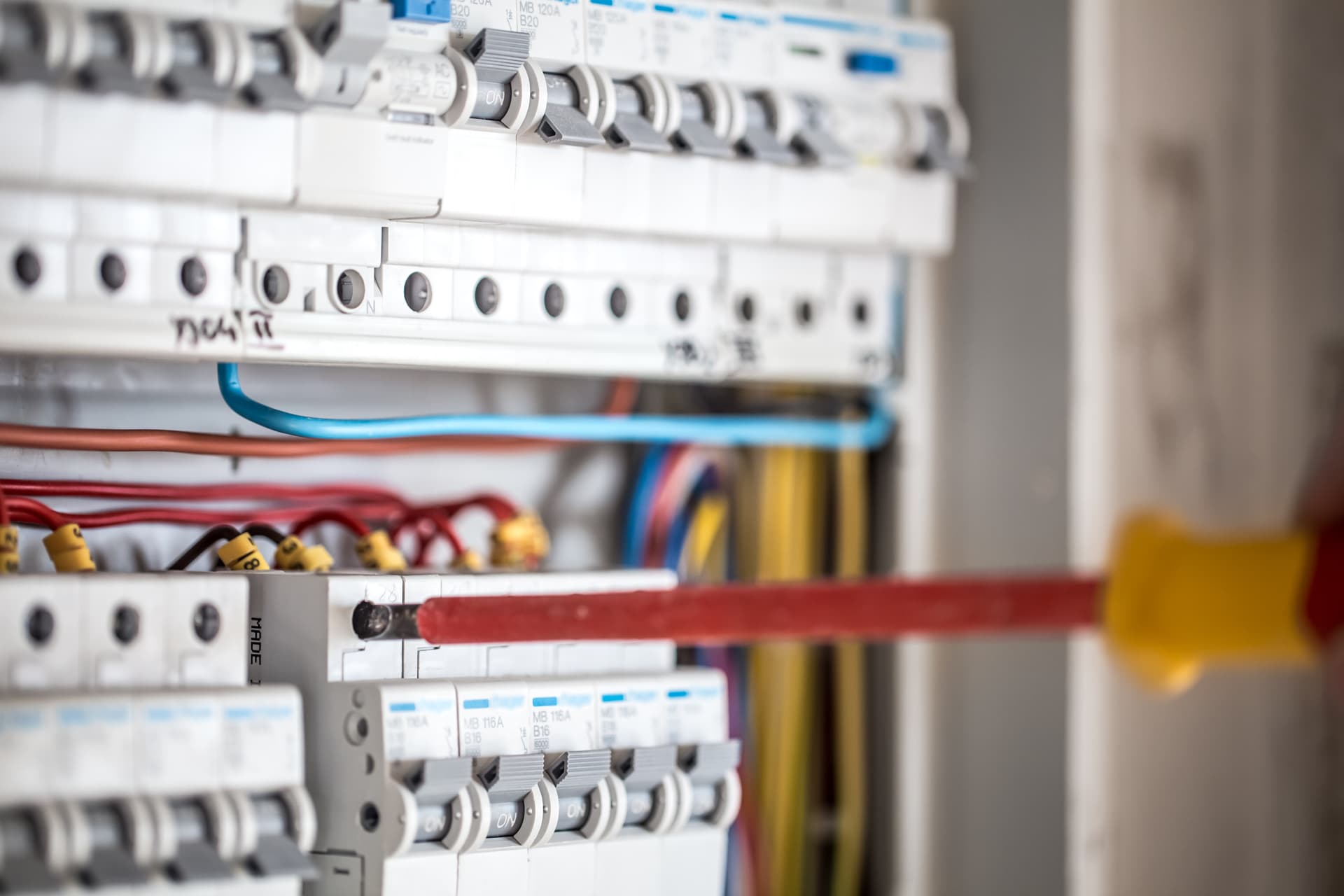
Emergency Electrical Repairs: What Happens When We Arrive
What happens during an emergency electrical visit?
When an electrical fault needs urgent attention, the first priority is not simply getting the lights or sockets working again. It is identifying what has become unsafe, preventing further damage and deciding what can be repaired without creating another risk.
At H & H Electric limted, we attend emergency electrical faults across Eton and surrounding areas including Windsor, Slough, Uxbridge and Gerrards Cross. As a NAPIT Registered business, we approach the visit in a structured way, starting with safety rather than assumptions. You can read the short overview of our Emergency Electrician service, then use this guide to understand what the work involves on site.
1. We establish what has happened
Before touching the electrical installation, we need to understand the sequence of events. A complete power loss, a repeatedly tripping consumer unit (fuse box) (fuse box) (fuse box), a burning smell, damaged cabling or a single dead circuit can all point to different faults.
We ask what was working before the problem appeared, whether anything was recently plugged in or switched on, and whether the fault affects the whole property or only part of it. This information helps us avoid treating a visible symptom as the cause.
For example, resetting a safety switch or fuse may restore power briefly, but if it trips again there is usually an underlying issue that needs investigating. Repeated resets can leave a developing fault in service and make diagnosis more difficult.
2. We assess immediate hazards
The condition of the installation and the surrounding area matters. Water near electrical equipment, exposed conductors, scorch marks, damaged sockets or switches, heat around a socket or a burning odour can change how the job must be approached.
We consider whether people can safely remain near the affected area, whether appliances or circuits need to be left untouched, and whether access to the consumer unit is safe. If you notice smoke or an active fire, move away and contact the emergency services. Do not handle damaged electrical equipment or attempt to remove covers.
This stage is also why an emergency call is not always a simple fault reset. The immediate danger may be at a socket, within a cable route, at the consumer unit or in equipment connected to the circuit.
3. We isolate the affected circuit
Once the installation can be approached safely, we identify the relevant circuit and isolate it where necessary. Isolation prevents the fault from remaining live while testing takes place and helps protect you, the property and anyone carrying out the repair.
A qualified electrician should check that the correct section has been isolated rather than relying only on a switch position. Older installations, altered circuits and incorrectly labelled consumer units (fuse boxes) can make this less straightforward. We work from the actual installation and test results, not just from labels or a quick visual check.
In some cases, the safest immediate outcome is to leave one circuit disconnected while unaffected parts of the property remain in use. That is different from restoring everything and hoping the fault does not return.
4. We trace the fault instead of replacing parts at random
Fault finding involves narrowing down where the problem is and why it has developed. Depending on the symptoms, that may involve checking accessories, connected equipment, cable condition, safety switches or fuses and the consumer unit.
The useful question is not only, “Which part has failed?” It is also, “What caused it to fail?” A damaged socket may be the result of heat at a loose connection. A tripping circuit may be caused by faulty equipment, insulation damage, moisture getting in or an issue within the circuit itself. Replacing one visible component without checking the wider fault can lead to a repeat call-out.
The extent of testing depends on the installation, the fault and what can be safely accessed. A fault in a modern, clearly arranged circuit may be isolated differently from one in an older property with later alterations or limited access to cable routes.
5. We decide between a permanent repair and a safe temporary measure
A permanent repair may be possible during the emergency visit when the fault is clearly identified, the affected area is accessible and the work can be completed safely. This could involve replacing a damaged socket or switch, correcting a connection or dealing with a straightforward fault on an accessible circuit.
A full repair may need to be arranged as follow-up work when the problem involves hidden wiring, extensive damage, multiple circuits, a wider installation issue or work that requires additional materials and planning. It is not responsible to force a complicated repair into an emergency visit if doing so would leave the installation unfinished or create unnecessary disruption.
A temporary safety measure should still have a clear purpose. Isolating a damaged circuit, securing exposed wiring or preventing use of an unsafe accessory can remove immediate danger while a permanent solution is planned. It should not be treated as permission to continue using the affected equipment.
6. We explain what has been done and what happens next
Before leaving, we explain which part of the installation has been isolated or repaired, what you should avoid using and whether further work is recommended. We explain the fault, immediate measures and next steps, including any testing or certification that may be needed.
That explanation matters because a property can appear normal after power is restored while an underlying defect remains. Clear information helps you make a sensible decision about follow-up repairs rather than relying on a reset consumer unit or a temporary workaround.
If an electrical fault has left your home, rental property or business in Eton unsafe, contact H & H Electric limted on 07775 926795. We will assess the situation, make the installation safe and explain the appropriate repair route.
